
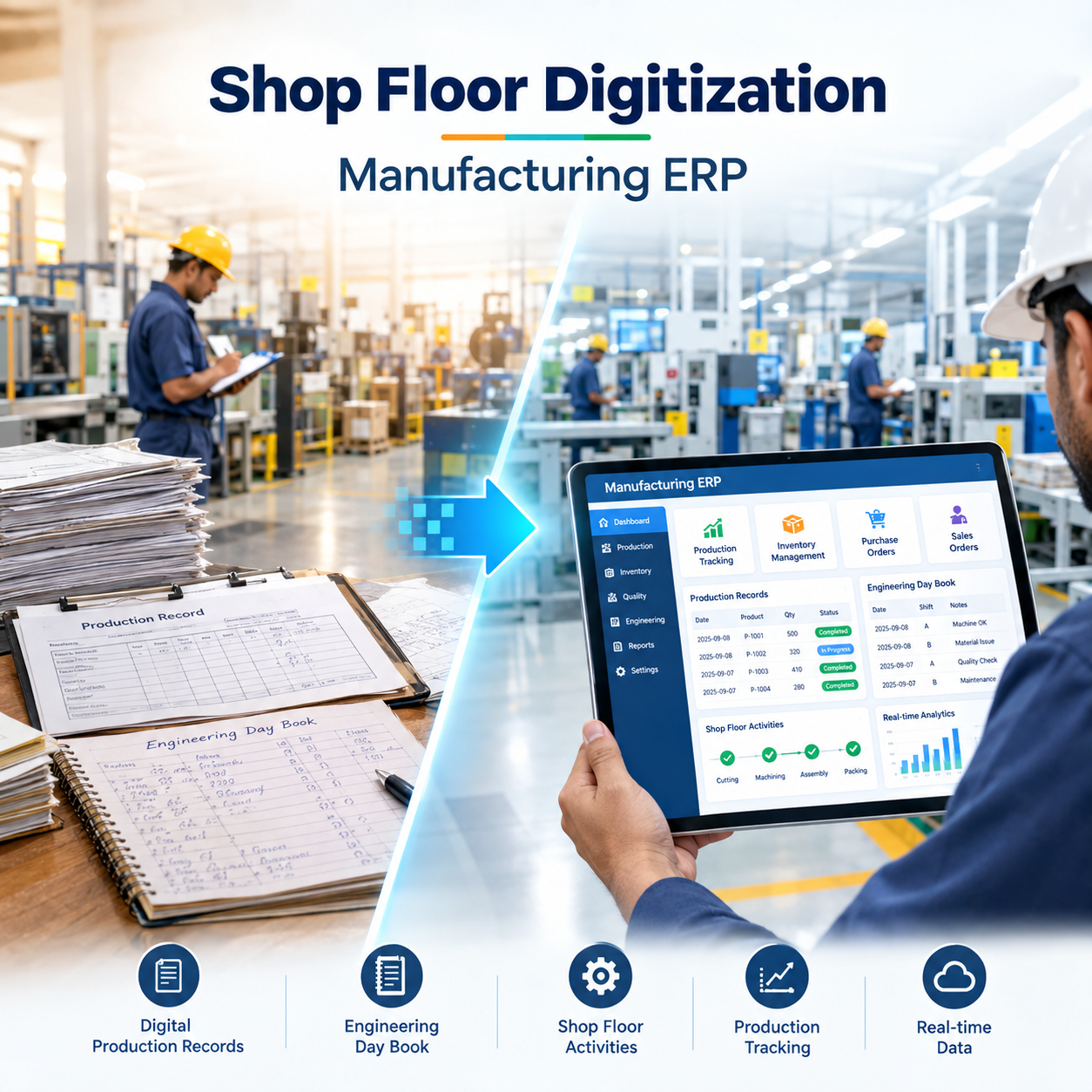
Walk onto almost any manufacturing shop floor built before the 2010s and you'll still find it: a battered notebook sitting near a machine, filled with handwritten notes about what happened during the shift. For a long time, this was simply how documentation worked. Today, it's one of the clearest signs that a plant's systems haven't kept pace with its production.
Why Paper Lasted So Long
Paper day books and log sheets survived for good reasons — they're cheap, require no training, and work even when the power goes out. For a small shop with one or two lines, a notebook can genuinely be enough. The trouble starts as a business grows: more shifts, more machines, more customers demanding proof of quality, more regulatory scrutiny. At that point, the same simplicity that made paper appealing becomes the bottleneck.
The Turning Points That Push Manufacturers to Digitize
Most manufacturers don't decide to digitize shop floor documentation on a whim — it's usually triggered by a specific pain point:
- A failed or difficult audit, where records couldn't be produced quickly or consistently enough
- A customer complaint that took days to investigate because nobody could find the relevant shift notes
- A key employee leaving, taking undocumented knowledge with them
- Scaling to multiple shifts or plants, where paper logs no longer sync across locations
- ERP implementation or upgrade, where documentation gaps become obvious once other processes are digitized
What Changes When Documentation Moves into ERP
Moving from paper to an ERP-based system — like Epicor — isn't just about typing the same notes into a computer. It changes what the documentation can do:
- Entries link to real production data. A note about a machine issue can be tied directly to the work order, part number, and shift it happened on, instead of existing in isolation.
- Everyone sees the same version. No more chasing down whichever notebook happens to be on the floor that day, or reconciling conflicting spreadsheets.
- History becomes searchable. Instead of manually flipping pages, engineers can pull every entry related to a specific part or machine in seconds.
- Reporting becomes automatic. Instead of manually compiling notes before an audit or management review, the system generates the report.
- Access can be controlled and tracked. Digital records show who entered what and when — something paper simply can't guarantee.
It Doesn't Have to Be All-or-Nothing
One misconception that slows manufacturers down is assuming digitization means replacing every process at once. In practice, most successful transitions start small — digitizing the highest-friction documentation first (often the engineering day book or quality deviation log), proving the value, and expanding from there. This approach reduces disruption and gives teams time to adjust without abandoning familiar workflows overnight.
Where to Start
If your shop floor is still running on notebooks or disconnected spreadsheets, the first useful step isn't choosing software — it's mapping where documentation gaps are actually costing you time, causing rework, or creating audit risk. That assessment points directly to which process should be digitized first, and how it should fit into your existing ERP.
SimpliRP works with manufacturers to close these documentation gaps inside Epicor ERP — turning paper-based shop floor records into connected, searchable, audit-ready data without disrupting day-to-day operations.
