
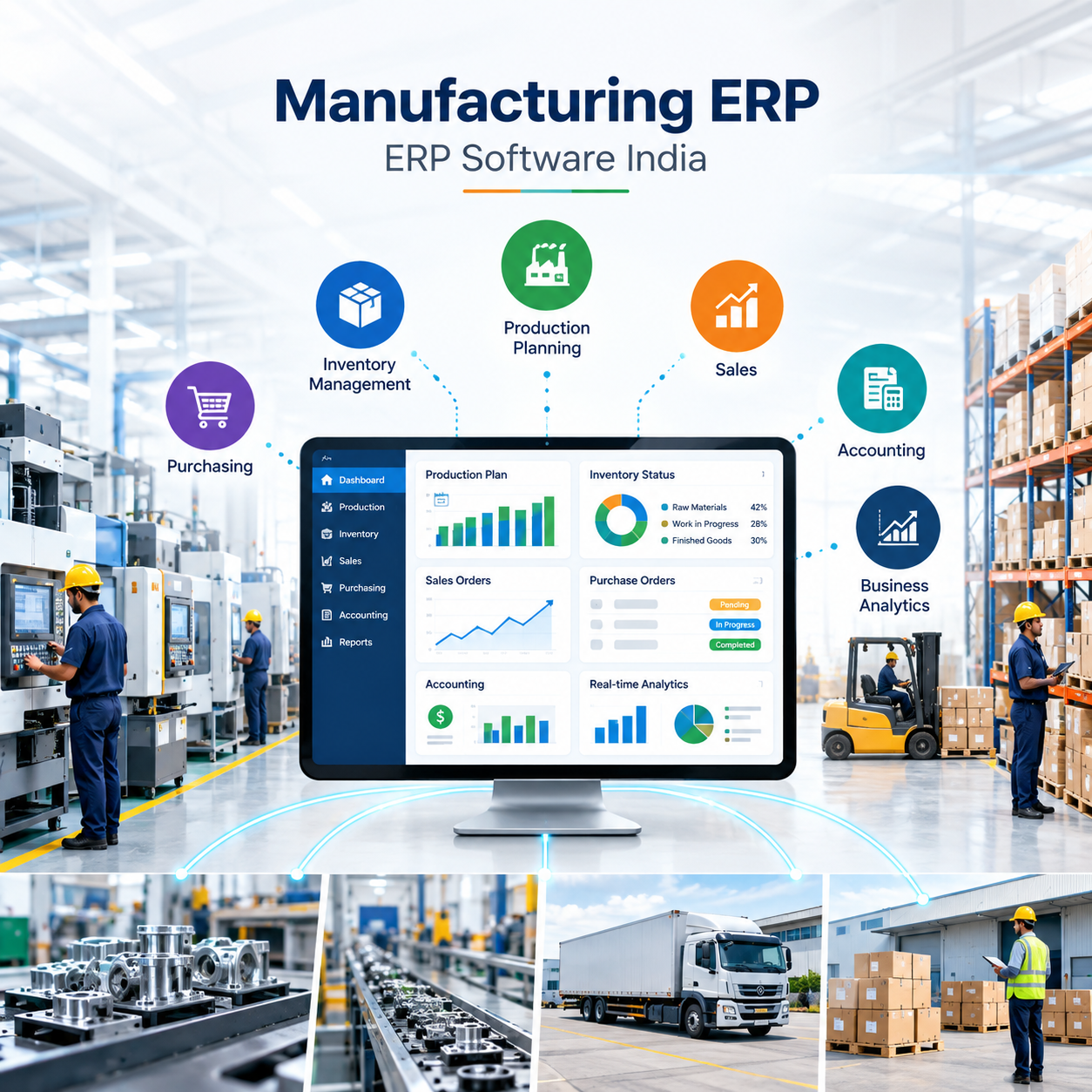
Manufacturing in India runs on tight margins, mixed production models, and constant pressure to meet delivery deadlines without over-investing in systems that don't fit the way the plant actually works. That's exactly why choosing the right manufacturing ERP in India matters more than picking the most feature-heavy or the most talked-about software on the market.
Many manufacturers get pulled toward ERP software built for large global enterprises, only to find half the modules go unused while the features they actually need — like job costing on mixed batch sizes, or GST-compliant reporting — are missing or clunky. Knowing which features genuinely move the needle for an Indian manufacturing plant makes the buying decision far easier.
1. Job and Batch-Level Costing
Indian manufacturers frequently run mixed production — job work, batch production, and make-to-order lines side by side. ERP software for manufacturing in India needs to track costs at the job or batch level, not just at a broad product-category level, so you know exactly where margins are being eaten into.
2. Shop Floor Data Capture
A modern manufacturing ERP should pull real production data directly from the shop floor — machine hours, operator time, material consumption — rather than relying on end-of-day manual entry. This is where a lot of "ERP for manufacturing industry in India" solutions fall short: they digitize the back office but leave the shop floor running on paper.
3. Bill of Materials (BOM) and Version Control
Manufacturing plants routinely revise product specifications, and an ERP system needs to track BOM versions cleanly, so production always references the current spec — not an outdated one buried in an email thread.
4. Compliance-Ready Reporting
GST filing, e-way bills, and statutory audits are a fact of life for Indian manufacturers. The best ERP software for manufacturing in India builds these requirements in natively, rather than requiring a separate accounting patchwork to stay compliant.
5. Scalability Without Overpaying
Not every manufacturer needs enterprise-grade complexity from day one. A good manufacturing ERP should scale with the business — starting lean for a growing plant and expanding into advanced planning, multi-plant visibility, or supply chain modules only when the business is actually ready for them.
6. Traceability from Raw Material to Finished Goods
Whether it's a customer audit or an internal quality investigation, being able to trace a finished product back through its production history, material lot, and operator is no longer optional for most manufacturing sectors — it's an expectation.
Choosing the Right Fit, Not Just the Right Features
The manufacturers who get the most value out of ERP aren't necessarily the ones who bought the most expensive system — they're the ones whose ERP matched how their plant actually operates. That's why an honest assessment of your current processes should always come before comparing software feature lists.
If you're evaluating your options, our detailed guide on ERP software for manufacturing in India breaks down implementation approaches and what to expect at each stage.
What's Next
Ready to see how a manufacturing ERP could fit your plant's specific production model? Get in touch with our team for a straightforward conversation about your current processes and where an ERP would actually help — no generic sales pitch, just a practical assessment.
