
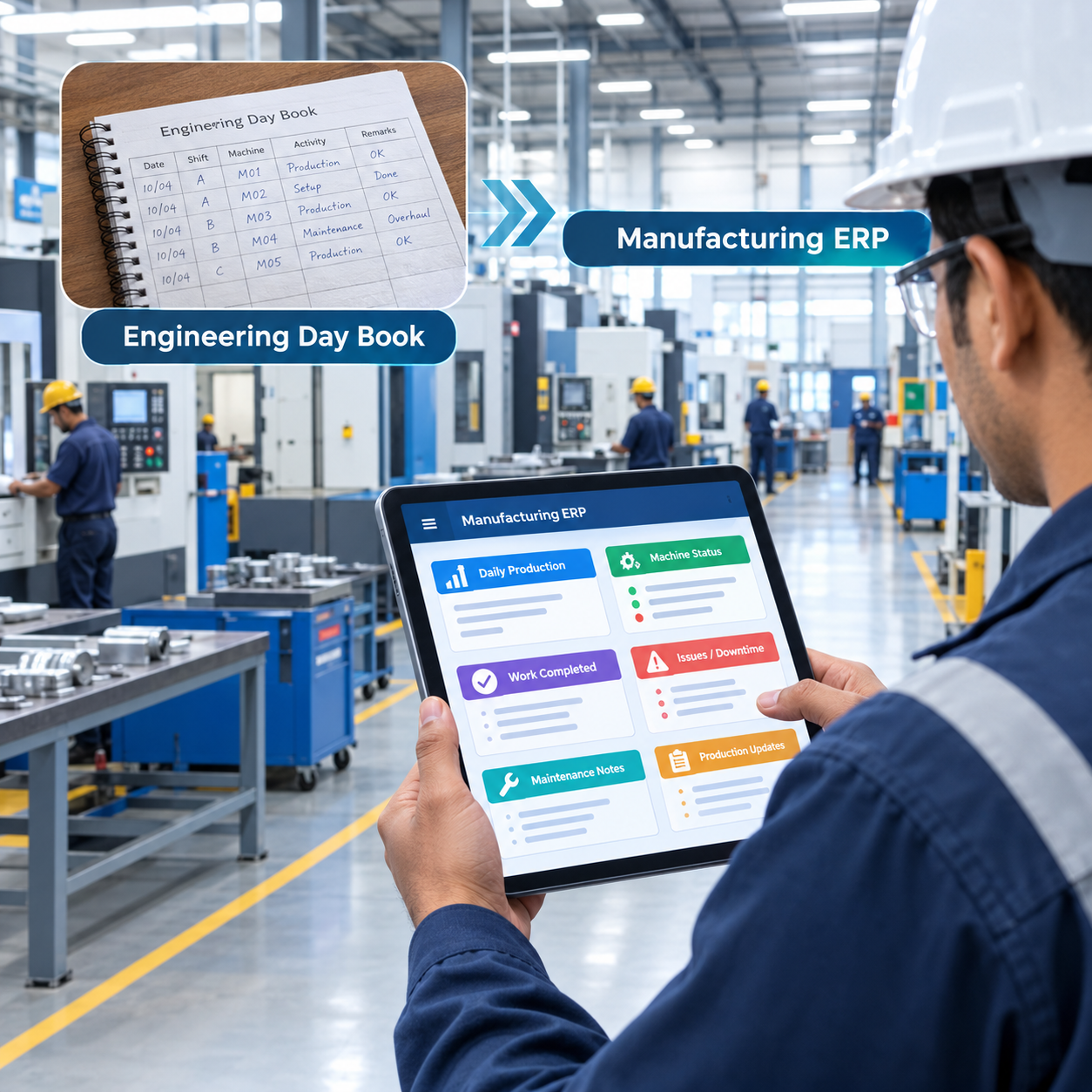
Every manufacturing plant runs on daily decisions — a machine setting changed, a material substitution approved, a deviation noted for later review. For decades, these details lived in a physical notebook on the shop floor: the engineering day book. It's simple, familiar, and almost always the first thing that breaks down as a plant scales.
What Is an Engineering Day Book?
An engineering day book is a running record of day-to-day engineering activity on the shop floor — design changes, process deviations, rework notes, tooling issues, and observations that engineers and supervisors log as they happen. Unlike a formal change order or a quality report, the day book captures the small, in-the-moment details that explain why something happened, not just what happened.
The problem isn't the concept — it's the format. A paper day book, or even a shared spreadsheet, is:
- Hard to search. Finding a note from three weeks ago means flipping through pages or scrolling endless rows.
- Disconnected from other data. The day book lives separately from production schedules, quality records, and inventory — so nobody connects a recurring issue to a root cause.
- Easy to lose. A damaged notebook or an accidentally deleted file means that institutional knowledge is gone for good.
- Impossible to audit. When a customer or regulator asks for traceability, a paper trail rarely holds up to scrutiny.
Why Digitizing the Engineering Day Book Matters
When the engineering day book moves into an ERP system like Epicor, it stops being an isolated log and becomes part of the plant's connected data. That shift changes what the day book can actually do for the business:
- Traceability becomes automatic. Every entry is timestamped, tied to a job, work order, or part number, and instantly retrievable — which matters enormously during audits or customer quality reviews.
- Patterns become visible. When day book entries are searchable and linked to production data, recurring problems — a specific machine, a specific supplier lot, a specific shift — surface much faster than they would in a stack of notebooks.
- Knowledge stops walking out the door. When an experienced engineer retires or moves on, their day-to-day observations stay in the system instead of disappearing with them.
- Root cause analysis speeds up. Instead of interviewing three people to reconstruct what happened on a given day, engineers can pull the exact record in seconds.
- Compliance gets easier. ISO, customer, and regulatory audits increasingly expect digital, time-stamped documentation — not a notebook that could have been edited after the fact.
What a Good ERP-Integrated Day Book Should Include
Not every "digital log" delivers these benefits. A well-designed engineering day book module should let teams:
- Log entries directly against a job, part, or work order
- Attach photos, drawings, or documents to an entry
- Tag entries by category (design change, deviation, tooling, quality)
- Search and filter historical entries instantly
- Generate reports for audits or management review
Getting Started
For manufacturers still relying on paper or spreadsheets, the fastest path forward isn't a massive rip-and-replace project — it's identifying where documentation gaps are causing the most rework, delays, or audit stress, and starting there. An ERP consulting partner can assess your current shop floor documentation process and recommend the right module or customization to close that gap without disrupting daily operations.
Looking to modernize your shop floor documentation? SimpliRP helps manufacturers plan, scale, and perform with ERP solutions built around real production workflows — including engineering day books that actually fit how your team works.
